

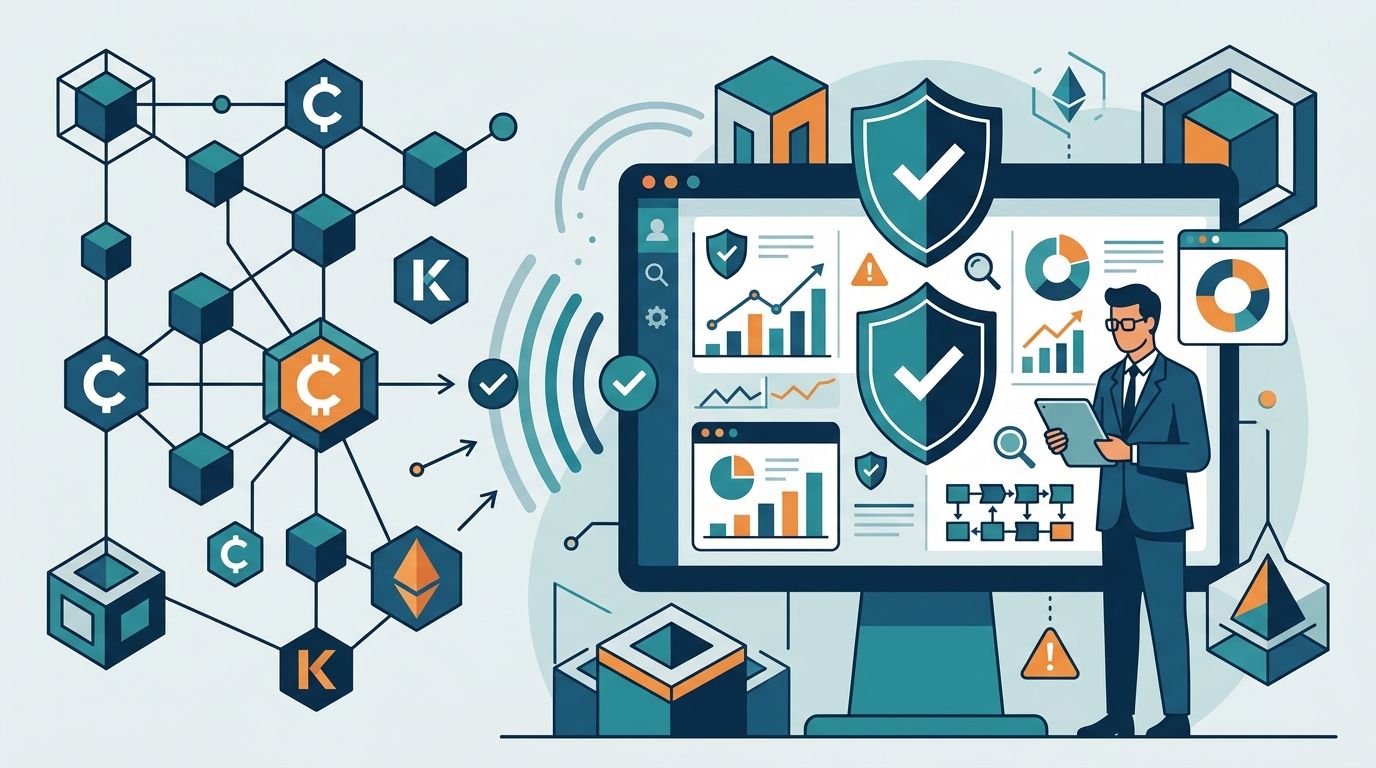
TL;DR
- Chainalysis is the best overall AML compliance software for crypto exchanges that need on-chain transaction monitoring.
- TRM Labs fits investigation-led teams; Elliptic fits teams focused on wallet exposure screening.
- Checktiv is best for link-based identity checks at onboarding, not as a standalone AML platform.
- In 2026, assess identity checks and on-chain monitoring as separate parts of the exchange workflow.
Best overall AML compliance software for crypto exchanges in 2026: Chainalysis for on-chain transaction monitoring. Best for investigations: TRM Labs. Best for wallet exposure screening: Elliptic. Best for link-based customer identity checks: Checktiv, which supports onboarding but is not a substitute for transaction monitoring.
Why this matters
A crypto exchange must know who is joining and assess activity after an account is active. Those are different jobs. An identity check cannot explain a wallet's transaction history, and a wallet-screening result cannot establish who submitted an ID.
That distinction shapes this 2026 ranking. Chainalysis, TRM Labs and Elliptic address on-chain activity in different ways. Checktiv addresses the customer-verification side. Choose the tool for the decision your team needs to make, then check how that decision fits into your wider review process.
What makes the best AML compliance software for crypto exchanges?
Use these criteria before comparing names. A long feature list matters less than a clear answer to what your reviewers will see and do.
- Wallet activity: Can reviewers assess relevant on-chain transactions and wallet exposure? Ask to see the activity behind a flag, not just its label.
- Identity checks: How does a customer submit information, and what can a reviewer inspect before approving an account? Keep this separate from blockchain analysis.
- Screening coverage: Which checks are included, and which require another provider? Verify sanctions and other list-screening requirements against your own program.
- Review records: Can a reviewer document a decision, its supporting information and the next action? A flag without a usable review trail creates more work.
- Workflow fit: Does the tool serve the team handling the decision? An investigations team and an onboarding team need different views.
For an exchange review, map each tool to those criteria before requesting a demonstration. In 2026, the most useful demonstration follows one example from flag to documented decision; it does not stop at a dashboard overview.
AML compliance tools at a glance
| Item | Best for | Standout function | Key limitation |
|---|---|---|---|
| Chainalysis | On-chain transaction monitoring | Monitoring blockchain activity | Customer identity checks need a separate workflow |
| TRM Labs | Investigation-led reviews | Blockchain investigation tools | Does not replace an onboarding decision process |
| Elliptic | Wallet exposure screening | Assessing blockchain wallet exposure | Does not establish a customer's identity |
| Checktiv | Link-based identity checks | Shared-link customer verification | Not a standalone on-chain monitoring tool |
The table compares roles, not interchangeable product bundles. If you need both onboarding checks and transaction monitoring, evaluate how two tools hand a case from one team to the other. Do not assume that buying a wallet-screening tool completes customer verification, or that verifying an ID completes an AML review.
1. Chainalysis: best AML tool for on-chain monitoring
Chainalysis is the default choice here when the main task is monitoring blockchain transactions. Its KYT offering is built around transaction monitoring, making it the most direct match for an exchange searching for on-chain AML software. Ask for a demonstration using the chains and transaction types your exchange handles.
Chainalysis pros:
- Focuses on transaction activity rather than treating an identity check as the whole AML workflow.
- Gives reviewers a basis for examining on-chain activity linked to a flag.
- Fits an exchange team whose central question is what happened on-chain.
Chainalysis cons:
- Transaction monitoring does not, by itself, verify the person opening an account.
- Reviewers still need rules for escalating and documenting decisions.
Best for: Exchanges that put ongoing transaction monitoring first. Verdict: Buy for the on-chain monitoring shortlist. In 2026, make the demonstration prove how an alert becomes a reviewable case, including what a reviewer can see before closing it. Confirm identity and list-screening coverage separately rather than inferring it from the monitoring screen.
2. TRM Labs: best for investigation-led exchange teams
TRM Labs provides blockchain intelligence, transaction monitoring and investigation tools. It belongs on the shortlist when reviewers need to investigate activity around a wallet or transaction, not simply receive a flag. Compare its investigation view against the questions your team answers during an actual case.
TRM Labs pros:
- Brings monitoring and investigation work into the same evaluation.
- Suits teams that need to examine relationships around on-chain activity.
- Gives a case-focused alternative to choosing a tool solely for initial alerts.
TRM Labs cons:
- Investigation capabilities do not replace customer identity collection at onboarding.
- A broad investigation view is useful only if reviewers have a defined decision process.
Best for: Exchanges where investigation work drives tool selection. Verdict: Buy for the investigations shortlist. Ask a reviewer to complete a sample case during the 2026 evaluation: identify the triggering activity, examine the available context and record the decision. If that sequence is awkward, a longer feature list will not fix the day-to-day work.
3. Elliptic: best for wallet exposure screening
Elliptic offers blockchain analytics for assessing wallet and transaction exposure. It is a fit when the central question is whether a wallet's on-chain connections warrant closer review. Treat the result as an input to a decision, not the decision itself.
Elliptic pros:
- Concentrates the evaluation on blockchain wallet and transaction exposure.
- Gives reviewers a way to examine the on-chain basis for a screening result.
- Fits a workflow that separates exposure assessment from customer identity checks.
Elliptic cons:
- A wallet result does not establish who controls an exchange account.
- Your team must define what happens when screening calls for further review.
Best for: Exchanges prioritizing wallet exposure assessment. Verdict: Buy for the wallet-screening shortlist. In a 2026 demonstration, ask what evidence a reviewer can inspect behind a result and how that evidence enters a case record. Also check coverage against the chains your exchange actually supports.
4. Checktiv: best for link-based identity checks
Checktiv, by Autohost, provides link-based identity verification and background and fraud screening for teams vetting customers. Its shared-link approach gives an exchange a way to request an identity check during onboarding. It is not the answer to on-chain transaction monitoring; pair this category of tool with a separate blockchain-monitoring assessment when both jobs are in scope.
Checktiv pros:
- Shared links give customers a defined way to complete an identity-verification request.
- Identity review addresses a different question from wallet-activity screening.
- Background and fraud screening can sit alongside the identity review.
Checktiv cons:
- It is not positioned here as a standalone AML transaction-monitoring platform.
- An exchange still needs to assess its sanctions, monitoring and case-review requirements separately.
Best for: Teams that need link-based customer identity checks as part of onboarding. Verdict: Buy for the identity-verification shortlist, not as the sole AML purchase. Keep the decision specific: confirm what information your reviewers receive, how they approve a customer and how the outcome reaches the team responsible for later activity reviews.
How we ranked these tools
The ranking starts with the searcher's likely core need: software for an exchange's on-chain AML work. Chainalysis takes the overall slot because transaction monitoring is its direct use case. TRM Labs earns the investigations slot, Elliptic the wallet-exposure slot and Checktiv the identity-check slot. Each recommendation answers a different operational question.
The limitations matter as much as the fit. None of the four product categories removes the need for your exchange to define screening rules, review ownership and escalation. A 2026 buying decision should state exactly which decisions a proposed tool supports and which decisions remain elsewhere. That prevents a polished demonstration in one part of the workflow from being mistaken for coverage of the whole program.
Which AML compliance software should you choose?
Choose Chainalysis as the default shortlist pick for on-chain transaction monitoring. Choose TRM Labs when investigation work is the deciding requirement, or Elliptic when wallet exposure screening is the clearest need. Choose Checktiv for link-based identity checks at onboarding, alongside a separate assessment of on-chain monitoring.
Before committing to a workflow, define 3 review stages: collect the information, assess the result and record the decision. Keep 2 review queues distinct if onboarding checks and transaction alerts go to different teams. Give 1 named owner per alert responsibility for its next action. These are process recommendations, not claims about what any vendor configures for you.
That separation makes the handoff testable. Show your team a customer-verification result and an on-chain alert, then ask who reviews each one and where the decision is recorded. If the answer changes depending on who is in the room, settle the process before comparing more product features.
One last thing
The strongest 2026 shortlist is not necessarily one vendor. It is a clear account of who checks the customer, who reviews on-chain activity and who records each decision. Start with the task your team cannot complete cleanly today, then evaluate the matching product category.
Related guides
Frequently asked questions
What's the best AML compliance software for crypto exchanges in 2026?
Chainalysis is the best overall shortlist pick here for on-chain transaction monitoring. TRM Labs is the investigation-led alternative, while Elliptic fits wallet exposure screening.
Is identity verification the same as crypto transaction monitoring?
No. Identity verification assesses a customer during onboarding; transaction monitoring assesses activity on-chain. An exchange that needs both must evaluate both workflows.
Is TRM Labs better than Chainalysis for investigations?
TRM Labs is the investigation-led pick in this guide. Compare both tools against a sample case that reflects the chains, activity and review decisions your team handles.
What is Elliptic best for?
Elliptic is best for exchanges prioritizing blockchain wallet exposure screening. A wallet-screening result still needs a reviewer and a defined next action.
Can Checktiv replace an on-chain AML monitoring tool?
No. Checktiv supports link-based identity verification and screening at customer onboarding; it is not the on-chain monitoring pick in this comparison.
What should a crypto exchange test in a product demonstration?
Test a complete review, from the initial flag or identity request to a recorded decision. Check that reviewers can inspect the information behind the result and know who owns the next action.
Do exchanges need separate onboarding and transaction-review workflows?
Yes, treat them as distinct decisions even when one team handles both. Document how an onboarding result reaches the people reviewing later account activity.