

TL;DR
- Can a rideshare platform reject a driver after a background check? Yes, subject to applicable screening and notice rules.
- Dispute inaccurate records with the screening company; challenge an eligibility decision through the platform's review process.
- FCRA employment-purpose protections include pre-decision disclosure, but their application to independent-contractor arrangements requires careful review.
- Checktiv guest verification does not replace a rideshare platform's driver eligibility decision.
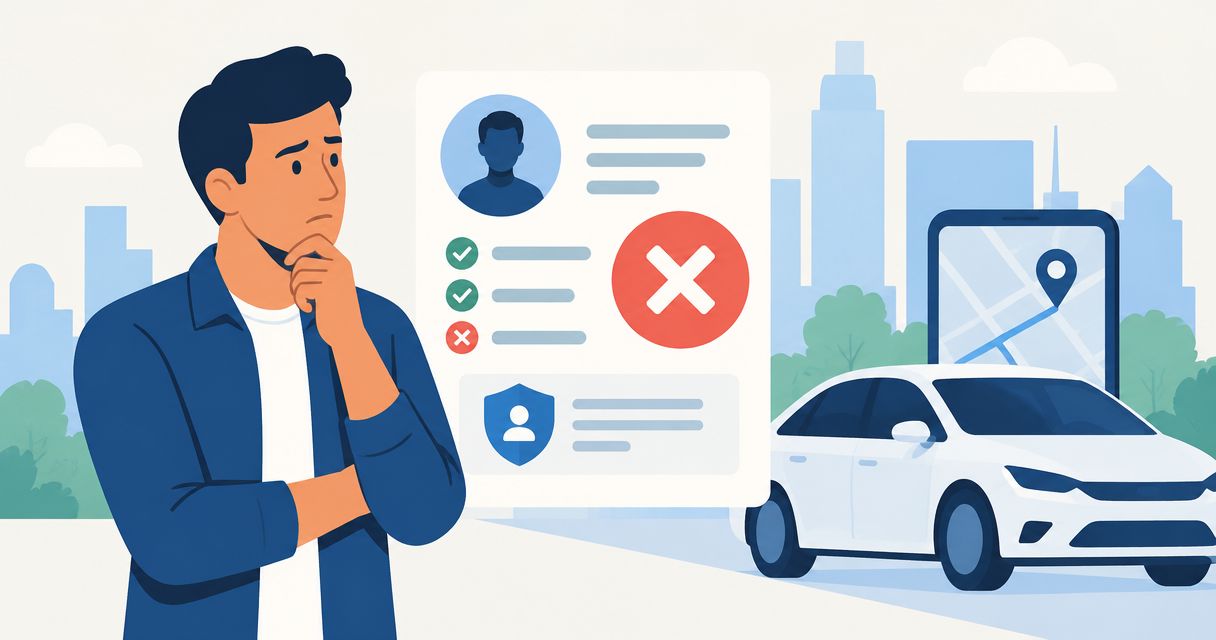
Yes. A rideshare platform can reject a driver after a background check when the information supports a lawful disqualification under applicable rules and the platform's eligibility policy. In the US in 2026, that decision must also respect applicable consumer-reporting, nondiscrimination and local rideshare requirements. A background-check result is evidence for a decision, not permission to ignore notice or dispute rights.
Why this matters
A rejection can involve separate problems: an inaccurate report, a correctly reported record or a platform applying its eligibility policy. Each calls for a different response. Asking support to reconsider does not necessarily start a formal dispute with the screening company.
For the wider process, see this guide to driver background checks for mobility platforms. Your immediate priority is narrower: get the report, identify the disputed information and find out whether the decision is pending or final.
Can a rideshare platform reject a driver after a background check?
Yes, but rejection must rest on a legally permissible decision process. A platform can apply eligibility requirements concerning driving qualifications and relevant background information, subject to the laws governing the location and screening arrangement.
These distinctions determine your next move:
| Situation | What it means | What you should do |
|---|---|---|
| Report contains someone else's record | The report's identity matching is in question | Dispute the mismatch with the screening company |
| Report omits a dismissal or updated disposition | The record may be incomplete or outdated | Submit documentation showing the current outcome |
| Accurate record conflicts with an eligibility rule | The issue is the decision, not necessarily report accuracy | Ask which requirement applies and whether review is available |
| Driving credential is expired or suspended | The issue concerns driving eligibility | Confirm the status with the issuing authority and correct any error |
| Screening is still pending | There is not yet a final approval or rejection | Ask whether information or documents are outstanding |
Do not assume that a completed report means approval. The screening company supplies information; the platform makes the eligibility decision. A report can be complete while the platform's review remains open.
What protections apply before and after rejection?
The Fair Credit Reporting Act, or FCRA, regulates consumer reports supplied by consumer reporting agencies. The specific obligations depend on the report's purpose and the relationship involved. Do not assume every rideshare screening arrangement receives identical treatment under employment-screening rules.
For a US application in 2026, separate the following stages before deciding what notice should have arrived.
Before a covered employment-purpose decision
When FCRA employment-purpose requirements apply, the organization generally must provide a clear disclosure and obtain written authorization before procuring the report. Before taking adverse action based on it, the organization must provide a copy of the report and the prescribed summary of FCRA rights.
That pre-adverse-action process gives you an opportunity to review the information before the decision becomes final. The FCRA does not establish one universal waiting period for every situation, so do not treat an online reference to a fixed number of days as a nationwide rule.
After an adverse decision based on a consumer report
The FCRA's adverse-action provisions require notices in covered circumstances. These include identifying the consumer reporting agency, explaining that the agency did not make the decision and describing applicable rights to obtain and dispute the report.
Under the FCRA, you can request a free copy from the reporting agency within 60 days after receiving an adverse-action notice. Keep the notice because it identifies the agency you need to contact. This right concerns the report, not a promise that the platform will approve your application.
When independent-contractor status complicates the process
Rideshare drivers commonly apply as independent contractors. Whether a particular arrangement triggers FCRA employment-purpose requirements is a legal question, not something settled by an app's wording alone.
Ask which process the platform is using and retain the disclosure, authorization and notices you received. State and local protections can also matter. If the missing notice is central to your complaint, get advice about the specific screening arrangement rather than relying on a generic hiring checklist.
What should you do after a background-check rejection?
Use this sequence to separate an information problem from an eligibility problem. For a 2026 application, keep everything connected to the same application and screening reference so your correspondence remains traceable.
- Save the notice. Keep the rejection message, screening reference, relevant emails and any explanation of review rights. Record when you received them.
- Get the report. Request the consumer report from the screening company identified in the notice. Read the actual entries instead of relying on a short app message.
- Check the details. Compare names, identifying information, court locations, case dispositions and driving-record status. Identify exactly what is wrong or incomplete.
- Choose the route. Dispute report inaccuracies with the screening company. Ask the platform to review a policy decision through its own process.
- Submit the evidence. Use relevant court documents, licensing records or identity corrections. Keep copies and proof of submission.
- Request the next step. Ask how a corrected report reaches the platform and whether a separate reconsideration request is required.
*Correcting the report and requesting reconsideration are separate tasks.*
Keep your explanation factual and specific. State which entry you dispute, why it is inaccurate and which document supports the correction. A clear record gives the screening company something concrete to investigate.
Why rideshare background-check decisions vary
There is no single nationwide list that resolves every rideshare application. These factors explain why the same general question can lead to different outcomes:
- Location. State and local transportation rules can establish driver eligibility requirements and restrict how records are used.
- Record type. A driving-license issue and a criminal-history entry raise different eligibility questions.
- Record accuracy. A matching error or missing disposition changes the reliability of the information supporting rejection.
- Applicable reporting limits. Federal and state rules restrict certain reporting practices, with exceptions that depend on the information and context.
- Platform policy. Each platform applies its published eligibility criteria within the limits of applicable law.
- Screening purpose. The legal treatment of the report affects which disclosure and adverse-action procedures apply.
Check the rule that governs your location and application in 2026. A forum post describing another driver's outcome is not proof that your report contains an error or that the same policy applies to you.
How do you dispute an inaccurate background check?
Start with the consumer reporting agency named in your notice. Under the FCRA, an agency generally has 30 days to investigate a dispute, although some circumstances allow up to 45 days. Those periods concern the report investigation, not a guaranteed platform appeal timeline.
Identify the entry precisely. For a court record, include the case identifier and the document showing the correct disposition. For a driving-record error, identify the licensing authority and the status you believe should appear.
Dispute the factual error, not just the unfavorable outcome. Saying that you need driving work does not establish that a reported record is inaccurate. Showing that the case belongs to someone else or that the report omits the final outcome addresses the information itself.
Keep a separate conversation open with the platform. Ask whether it will pause its review, accept supporting documents or reconsider after a correction. Do not assume the screening company can change the platform's policy decision.
Can you appeal if the background report is accurate?
An accurate report and an unchangeable decision are not the same thing. Ask whether the platform offers reconsideration and whether local law requires an individualized assessment or another review procedure.
Request the specific eligibility requirement involved. Then explain why the decision should be reviewed under that requirement, using relevant documents rather than a general request for another chance.
The limitation is straightforward: an appeal does not create a right to approval. A platform can maintain a lawful disqualification after reviewing accurate information. Likewise, correcting a reporting error does not guarantee acceptance if another valid eligibility issue remains.
Does a clean background check guarantee approval?
No. A background check addresses only the information and criteria included in that screening. A platform can separately assess required documents, driving credentials and other lawful application requirements.
Ask whether the rejection actually resulted from the consumer report. If the issue is a missing document or expired credential, disputing an unrelated criminal-history report will not resolve it.
For your 2026 application, use the platform's current requirements for the relevant service and location. Do not substitute another applicant's experience for the rule being applied to you.
Where identity verification fits
Identity verification and driver eligibility answer different questions. Establishing that a person matches an identity does not establish that the person meets every driving or background requirement.
Checktiv guest verification is best for independent short-term rental hosts who want a zero-code, shared-link workflow. Checktiv, by Autohost, also describes screening uses across marketplaces and mobility, but a verification result does not replace the platform's responsibility to make a lawful eligibility decision.
The useful distinction is between collecting verification information and deciding what it means. Checktiv guest verification gives hosts a link-based way to verify guests; it is not a rideshare appeal service. Drivers seeking reconsideration should contact the screening company and the platform identified in their notices.
Which sources establish these rights?
For US readers in 2026, the legal reference points are the FCRA and applicable state and local law, not a platform's screening status label. Relevant federal provisions include:
- 15 U.S.C. § 1681b(b): disclosure, authorization and pre-adverse-action requirements for covered employment-purpose reports.
- 15 U.S.C. § 1681m(a): adverse-action notices when a decision is based wholly or partly on a consumer report.
- 15 U.S.C. § 1681i: consumer reporting agency procedures for disputes about report accuracy or completeness.
- 15 U.S.C. § 1681j(b): free report disclosures following qualifying adverse-action notices.
The Federal Trade Commission and Consumer Financial Protection Bureau publish explanations of consumer-reporting rights. Their guidance helps explain the federal framework; location-specific rules still require a separate check. This article provides general information, not legal advice about an individual rejection.
One last thing
A report dispute and a platform appeal are separate tracks. Before closing either conversation, ask who receives the corrected report and what triggers reconsideration. A corrected record is most useful when it reaches the person responsible for reviewing your application.
Related guides
- How identity verification works for gig economy drivers
- Background screening for gig economy platforms
- Driver verification software for mobility platforms
Frequently asked questions
Can a rideshare platform reject me after my background check is complete?
Yes. A completed background check does not guarantee approval because the platform still evaluates the report against applicable eligibility requirements. The decision must comply with the laws governing the screening and application.
Does the background-check company decide whether I can drive?
The rideshare platform makes the eligibility decision, while the screening company supplies the report. Contact the screening company about inaccurate information and the platform about reconsidering its decision.
How long does a background-check dispute take?
A consumer reporting agency generally has 30 days to investigate an FCRA dispute, with some circumstances allowing up to 45 days. That investigation period is not a guarantee of when the platform will reconsider your application.
Can I get a free copy of the report after rejection?
You can request a free report from the consumer reporting agency within 60 days after receiving a qualifying adverse-action notice. Use the agency details in the notice and retain a copy of your request.
Can I appeal even when the record is correct?
You can request review through any reconsideration process the platform provides, and applicable law can require additional procedures. An accurate report does not automatically bar review, but review does not guarantee approval.
Do independent-contractor drivers have the same screening rights as employees?
Do not assume identical treatment. Whether FCRA employment-purpose requirements apply to a particular independent-contractor screening arrangement requires legal analysis, and state or local law can provide additional protections.
Will fixing my report automatically reactivate my account?
No. Correcting a report addresses the information, while reactivation remains a separate platform decision. Ask how to submit the correction for reconsideration and whether another eligibility issue remains.