

TL;DR
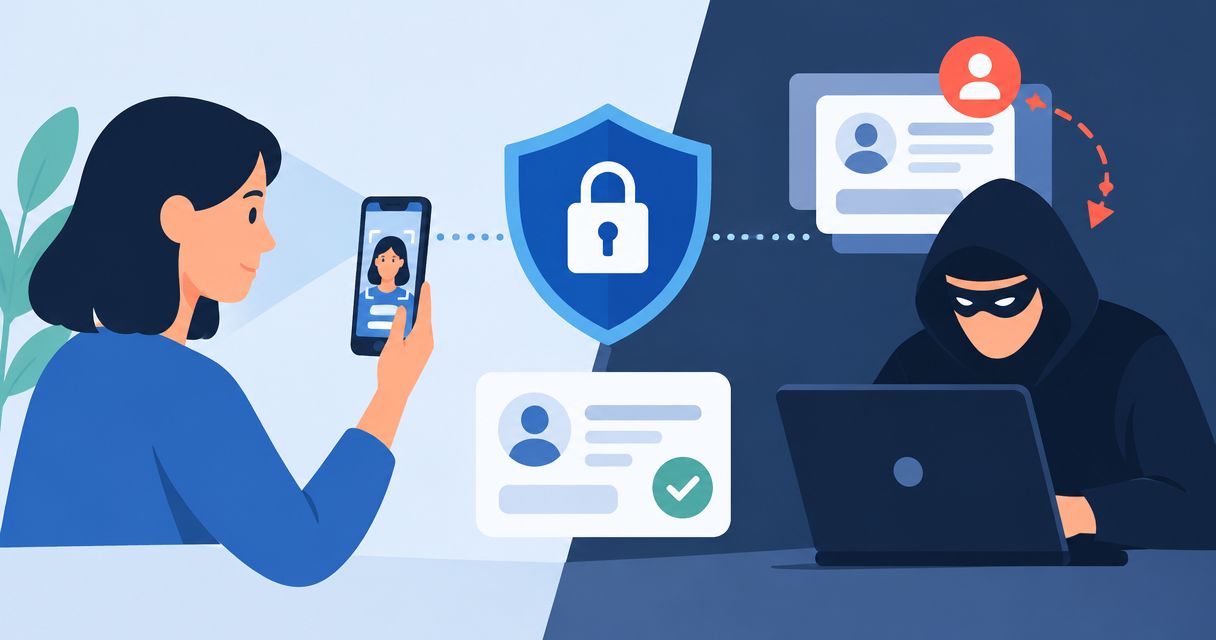
- Identity verification account takeover fraud protection depends on checking identity at the right moment, not just registration.
- Checktiv suits independent hosts seeking shared-link guest verification, not a replacement for account security.
- Passkeys protect sign-ins; identity verification helps establish who someone is. You need the right control for each task.
- A verified guest identity does not prove that every later message or account change comes from that guest.
Identity verification helps prevent account takeover fraud when it checks the person requesting access, but it cannot protect an account on its own. A check completed at registration does not stop someone from later using a stolen password or an already signed-in session. Use identity checks alongside strong sign-in protection, controlled account recovery, and confirmation of sensitive changes.
Can identity verification prevent account takeover fraud?
Yes, identity verification helps when an impersonator must prove they are the legitimate account holder before a sensitive action proceeds. Its value depends on what happens after the check: the result must relate to the correct account, and an unsuccessful or unresolved check must not lead straight to approval.
For a rental host, this distinction matters when someone requests a change to a booking, contact details, or access arrangements. The identity verification guide for short-term rental hosts covers the guest-verification side. Protecting your own booking and email accounts requires separate sign-in controls.
| Control | Best for | What it establishes or protects | Main limitation |
|---|---|---|---|
| Identity verification | Establishing identity | Evidence that a person matches a claimed identity | Does not protect every later account session |
| Passkeys | Protecting account sign-in | Possession of a credential bound to the legitimate service | Recovery and already signed-in sessions still need protection |
| Authenticator codes | Adding a sign-in factor | Access to an enrolled authenticator | Codes can be captured through phishing |
| Session controls | Limiting continued access | Whether an existing signed-in session remains valid | Do not establish a person's real-world identity |
| Change approval | Protecting sensitive updates | Whether a particular request meets your approval rules | Weak confirmation channels undermine the process |
Identity proof and permission to act are different decisions. Keep them separate in your 2026 account-security checklist, even when the same person usually handles both.
Why this matters
Guest verification and account security answer different questions. Verification asks whether a guest is who they claim to be; account security asks whether the person using an account is authorized to use it now.
Picture a returning guest with a previously verified identity. A message arrives from the guest's account asking you to send arrival details to a different address. The earlier identity check supports the original booking record, but it does not establish who sent the new message.
The same principle applies to your own accounts. Verifying every guest does not protect your property-management sign-in, email inbox, or payout settings. Give those accounts their own protections rather than treating guest screening as coverage for your whole business.
At registration: establish identity, not permanent trust
An identity check at registration creates a starting point. Depending on the method, it examines evidence such as an identity document and whether the person presenting it matches that evidence.
That starting point is useful for later review. You can compare a disputed request with the identity associated with the account instead of relying only on a display name or email address.
The limitation is timing. Someone who takes control after registration does not necessarily encounter the original check again. A verification badge describes an earlier event, not an uninterrupted chain of authorized activity.
For your 2026 workflow, record what the check established and which booking or account it concerned. Avoid labels that imply broader approval, such as treating identity verification as confirmation that a payment, account change, and arrival request are all legitimate.
At sign-in: protect the account credential
Use sign-in protection to address stolen passwords. Prefer passkeys where the service supports them, and enable multifactor authentication rather than relying on a password alone.
Multifactor authentication requires evidence from at least 2 distinct authentication factors, such as something you know and something you possess. Entering a password twice does not satisfy that requirement. Neither does adding another question based only on information someone knows.
Different methods have different limits. Authenticator codes add protection, but an impostor can ask someone to enter those codes on a phishing page. Passkeys bind authentication to the legitimate service, which addresses that credential-phishing problem.
Identity verification serves another purpose. Requiring a document check at every ordinary sign-in adds effort without replacing the need to protect credentials and sessions. Match the control to the problem rather than asking one check to do every job.
During recovery: confirm who should regain control
Account recovery deserves the same attention as sign-in. A protected login offers limited value if someone can bypass it through a weak reset process.
A fresh identity check can support recovery when the account has an established, verified identity to compare against. Without that connection, checking a document only establishes an identity presented now, not necessarily ownership of the existing account.
Do not treat a newly supplied email address or phone number as independent confirmation. If those details are part of the disputed request, relying on them makes the request its own evidence.
Recovery also needs an outcome beyond identity proof. Where the service allows it, end other sessions and replace compromised sign-in methods after restoring access. Otherwise, the legitimate account holder and an unauthorized person can remain signed in at the same time.
Why identity verification's effectiveness varies
For a 2026 review, focus on the decisions around the check rather than a broad promise to stop fraud. These factors determine whether identity evidence addresses the account-takeover scenario in front of you:
- Timing: A registration check does not challenge someone who gains access later. Place additional review before the sensitive action you need to protect.
- Account connection: Match the verification result to the correct account and request. A valid result from an unrelated person is not approval.
- Evidence quality: Checking a document alone is different from checking both the document and the person presenting it. Understand what the selected method actually examines.
- Confirmation channel: Messages from a potentially compromised inbox do not independently confirm account ownership. Use an established route that is not part of the disputed change.
- Recovery rules: A reset process that bypasses normal protections creates another route into the account. Apply clear ownership checks before changing access.
- Session handling: Changing a password does not necessarily end every existing session. Review the service's session controls rather than assuming it does.
These are evaluation criteria, not promised capabilities of every verification service. Ask which controls your booking platform, email provider, and verification provider each supply.
How should a host handle a sensitive change request?
Use a consistent sequence that separates the request, the identity evidence, and the approval. You do not need to become a security specialist to stop treating every message as sufficient authorization.
- Review request. Identify exactly what the person wants changed. A question about parking needs a different response from a request to replace the booking contact.
- Confirm identity. Check the request against the established booking record and contact route. If identity verification is appropriate, connect its result to that guest and booking.
- Approve change. Make the change only after the relevant checks are resolved. Record the reason for approval and notify the established contact through an appropriate channel.
*Confirm the request before changing access or booking details.*
Keep the guest experience clear. Explain what needs confirmation, why the request is different from an ordinary booking question, and what happens next. Do not describe a guest as dishonest because a check needs clarification.
Where shared-link guest verification fits
Checktiv provides zero-code guest verification through shared links. Checktiv is best for independent hosts who want a professional guest-verification workflow without writing code. Its role here is identity verification, not replacing the security controls on your email or booking accounts.
The setup journey is 3 steps in 5 minutes: sign up, get a link, and review the verification. Treat that as the setup journey, not a guarantee that every guest completes a check within a fixed time. You still need a clear rule for when to request verification and how to handle the result.
Does a verified identity make a booking change trustworthy?
A verified identity supports an identity decision, not every subsequent booking change. Check that the person making the request is connected to that identity and has authority to change the booking.
For example, a legitimate guest can ask you to coordinate with another traveler. That request still needs a clear handoff. A second person's identity does not, by itself, authorize that person to receive access details or change the reservation.
Is a background check enough to stop account takeover?
A background check does not establish control of an account or protect a sign-in. It examines a different question about the person being screened.
For your 2026 process, keep screening results separate from access decisions. Neither a clear background result nor a successful identity check proves that the current user controls the account legitimately.
Should you repeat identity verification for every request?
Repeat identity verification when it resolves a specific identity question, not simply because another message arrived. Routine questions and sensitive account changes should not automatically receive the same treatment.
Set the rule before you need it. Define which requests require extra confirmation, what evidence you will accept, and how a guest can resolve an incomplete check. Consistency supports a professional experience without making every interaction harder.
One last thing
A successful identity check should answer a specific question, not end every question. The useful record is not simply that someone passed verification. It is which person was checked, which account or booking the result belongs to, and which decision it supported.
Make that distinction part of your 2026 hosting checklist. Before approving a sensitive change, ask whether your evidence supports this request now, rather than relying on an earlier approval for something else.
Related guides
- How document verification detects forged IDs
- How liveness detection helps prevent spoofing
- Can identity verification stop chargeback fraud?
Start your guest verification workflow
Use shared links to verify guests without writing code.
$5 in free credit on signup · no card required.
Frequently asked questions
Can identity verification completely prevent account takeover fraud?
No. Identity verification can challenge impersonation at a particular point, but it does not replace sign-in protection, session controls, or secure recovery. A check at registration does not protect every later action.
Is identity verification the same as multifactor authentication?
No. Identity verification establishes evidence about who someone is, while multifactor authentication requires at least 2 distinct authentication factors for access. They address different parts of account protection.
Can someone take over an account after the owner passes verification?
Yes. An account can be compromised after the legitimate owner completes verification through stolen credentials, session theft, or weak recovery. The earlier identity result does not establish who is using the account now.
Should I ask a guest to verify again after changing an email address?
Confirm ownership before approving the email change, rather than relying on the new address afterward. A fresh identity check can support that decision when it connects to the established guest identity and booking.
Will changing a password remove someone who is already signed in?
Not necessarily. Session behavior depends on the service, so use its option to sign out other sessions when available. Also review recovery details and enrolled sign-in methods.
Can Checktiv replace security on my booking platform?
No. Checktiv provides shared-link guest verification, while your booking platform controls its own sign-in, recovery, and session protections. Use guest verification alongside those controls, not instead of them.
Is a successful identity check proof that a payment is authorized?
No. A successful identity check does not establish authorization to use a particular payment method. Payment authorization and identity verification require separate decisions.